
AI in the Irish Mortgage Process: Tech Speed vs. Human Trust
Tea & Mortgage Podcast
AI & the mortgage process
Discover how modern Irish mortgage brokers, like ourselves JC Mortgages, leverage AI to eliminate paperwork delays while keeping expert, human relationships at the core of your home-buying journey. With rising prices, changing market conditions, and constant headlines, it’s easy to feel unsure about what to do next.
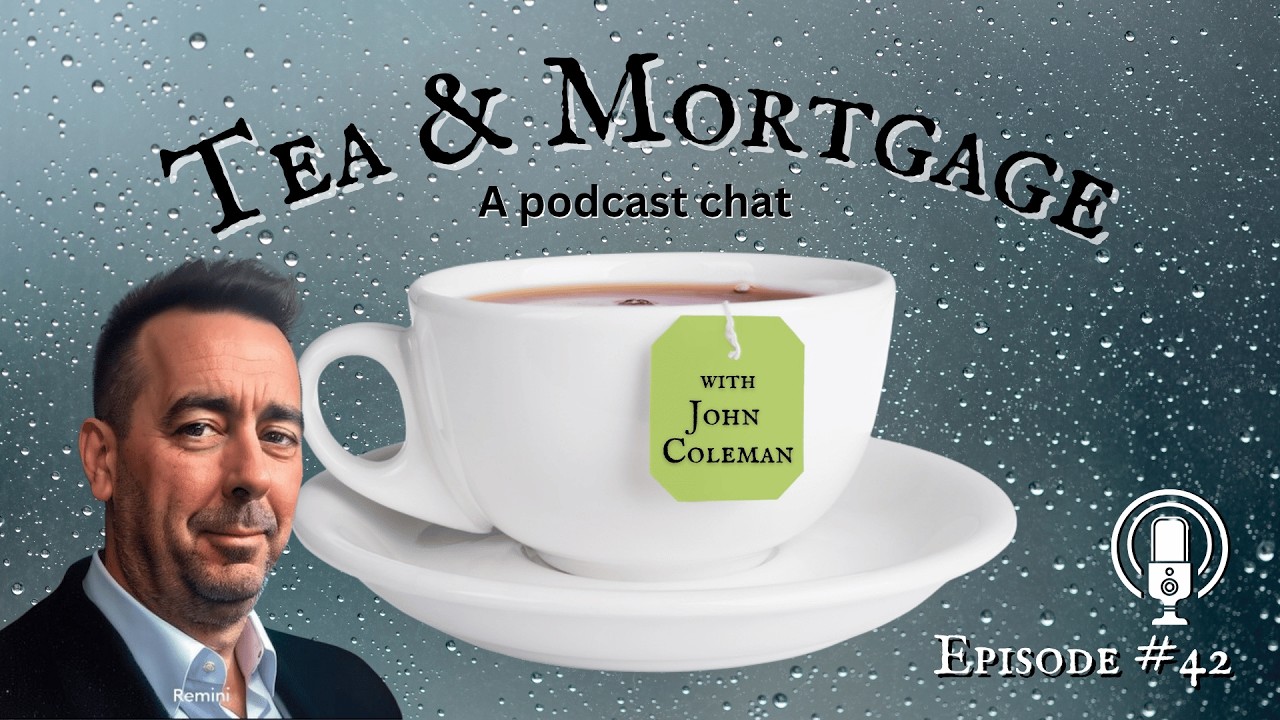
how artificial intelligence is changing the Irish mortgage landscape
In this episode of our Tea & Mortgage podcast, John Coleman dives into how artificial intelligence is changing the Irish mortgage landscape and why it will never replace the real, human conversations you need when buying a home.
At JC Mortgages, we’ve introduced smart AI tools to cut through administrative red tape, streamline paperwork, and slash response times. But make no mistake: we aren’t using tech to hide behind a computer or spam you with generic “AI slop”. Our ultimate goal is to clear the decks of routine admin so we can get you talking to one of our expert human advisors faster than ever. Think of AI as the ultimate caddy, it handles the heavy lifting, but it’s the experienced human golfer who knows how to play the shot and get you the keys to your new home
Podcast Transcription:
The big 42 & the AI update
00.00.00 Intro
Norm Schriever: Hey everyone, what’s going on? Welcome to Tea & Mortgage episode number 42 with your host, John Coleman.
John Coleman: Hello folks, how are you? I thought you promised me you were going to stop saying the number! Episode 42. Stop it.
Norm Schriever: They’re climbing! They’re getting higher, just like our age, right?
John Coleman: They are, they are. Just like our birthdays. At the point that it passes that particular number, we will say nothing, okay? We’ll just keep moving on as if it didn’t happen. Keep it silent.
Norm Schriever: Absolutely. Well, for those of you who have watched this channel and subscribed to the Tea & Mortgage podcast, you know that intermittently—sometimes every year, sometimes every six months—we do a quick update on AI and the evolution of technology, particularly in the mortgage business and how it benefits John’s clients. So we wanted to bring you a quick update on that. John, maybe you could speak to that a little bit?
John Coleman: Yeah, absolutely. First and foremost, every time we’ve done this, we’ve always wondered, “Where is the world going to be in six months’ time?” And I think every six months when you look at it, you go, “Oh my God, it’s gone even further than anyone could have ever imagined.”
The AI phone agent & maintaining authenticity
00.01.30
John Coleman: I’m going to give you a rundown of what we’ve introduced. About three months ago, we brought in an AI phone agent. I’m using it in its simplest form because, ultimately, my goal is always about getting human beings talking to human beings in the quickest timeframe possible.
When people fill in a form to get information on a mortgage, our AI agent reaches out. It openly tells people what it is—we’re not trying to hide anything. It essentially says, “Nothing personal, this is JC Mortgages’ AI, just calling to let you know we’re sending you a quick email with a link. Fill that in, and then one of our advisors will arrange a call with a human expert.”
It’s working well. I’ve had the odd person send me a message saying, “Sorry, that was an AI phone call, I have no interest.” And I completely respect that; they are absolutely entitled to that view. I always respond and say, “Listen, I’m not trying to replace the human being at all. What I’m trying to do is use the technology that’s out there to get human beings talking to human beings in a much quicker and more efficient way.”
In any business, you’re not going to please everyone all the time. But I’m comfortable with our processes and how we are using these systems to provide better service. We have a good reputation, and I would do nothing to risk that by using systems that didn’t feel right.
Ultimately, I think we’re all going to become immune to getting these perfect emails or perfect documents. You can’t replace the human being. You can’t replace the feeling of talking to someone and thinking, “Yeah, this guy gets me. This guy knows what he’s talking about, and this is authentic.” People need people to live the journey.
AI as the caddy not the golfer
00.02.30
John Coleman: I’m going to rob a phrase from you, my friend: The golfing caddy. AI isn’t replacing anyone; it’s just being the caddy. It’s there to advise.
The most important piece of any relationship is that 10% where the human gets to know the other human and understands what they’re about. The systems can do the drudge work—the stuff that requires no deep thinking. When that piece is done, the human comes back in to say, “Okay, here’s the assessment.” The technology just helps me advise you in a more efficient and quicker way, which gives a better journey for the client.
I won’t apologize for continually looking at what’s being brought into the world and asking, “How can I make our team more efficient by embracing this?” It’s scary where everything is going, but it’s exciting and challenging at the same time because I see the opportunity. We might normally spend three hours reviewing a client file before I’d have a conversation. Maybe I can bring that down to an hour. Instead of the client having to wait two days to talk to me, that wait time is brought back to one day.
Norm Schriever: I think that’s a super important distinction. What you’re not trying to do is just create more “AI slop.” You know, we could automatically send 50,000 emails, add someone’s first name to make it look customized, and fill the world with generic AI garbage.
What you’re trying to do is focus on the client experience and ask, “How can we eliminate inefficiencies to free up more time, so that the professional can be available to answer questions and lead them human-to-human?” It’s about improving the lives and the mortgage journey of the people under your care.
Avoiding the 'AI Ick'
00.03.45
John Coleman: The generic stuff turns me off. You can get the “AI ick”—I think we can trademark that! You see things and think, “Hold on, where are your actual thoughts here?” Formulate your thoughts and use your own words; don’t just take what’s thrown at you. You need to be the expert.
I’m not saying don’t use it to make things look a bit better. When I’m writing emails, my mind wanders in all different directions, so there is value in having my words structured a bit better. But it still has to be me. It has to benefit people, not just be used for mass marketing.
I am looking at every single piece of the business and asking how we can make it better. The mortgage industry is still painful for people. Gathering paperwork is never fun, but there is a thing called “one-source banking” that hasn’t been fully embraced yet. It would give banks the authority to seamlessly collect your statements. The devil is always in the detail, and right now, AI still hasn’t quite grasped all the little nuances. A human being who understands context still needs to oversee it.
If I can help 10 people instead of five because of this technology, that’s great for my business, but it’s also great for the people. You get immense satisfaction in being able to ring someone and say, “Go get the keys to your house.” If you put the other person’s interests ahead of your own, it pays off in spades. People know they’re dealing with someone authentic. I will tell people the truth—even if it’s tough love—and no AI agent is going to be able to do that.
The bigger picture: society, the economy, and human connection
00.04.50
Norm Schriever: I’ve heard insane stories where people are finding AI partners online. You just don’t know where the world is going. But one unintended consequence of this AI revolution is that it’s pushing people back towards authentic human relationships, which we are hardwired for. People want to learn from human beings, they want to gather again. AI can speed up the processes, but the human being is always going to be the human being.
John Coleman: Ironically, with all the systems we’re bringing on board, I now have 30 people working with me. A year ago, it was 15. I’m embracing technology, but I am still bringing more human beings on. From a business point of view, I wouldn’t have been able to hire those people if I hadn’t brought in the systems that helped generate more business and create more opportunity.
Norm Schriever: AI is opening up these new possibilities. What used to be impossible is now a reality. It’s stretching our imagination as business owners. But it does make you wonder about the broader societal impacts.
John Coleman: I do worry about the long-term effects on jobs and the world economy. For example, I’m currently looking at building my own internal management system. Do you know what my bill for Monday.com is going to be this year? €25,000. Two years ago, building my own custom system would have cost over €100,000. Today, I can get it built for about €10,000 to €15,000, with a few grand a year in maintenance. It pays for itself in a year.
If I’m thinking like that, there must be a dozen other business owners with a similar thought process. If software companies suddenly see demand fall off a cliff, those jobs potentially disappear.
Norm Schriever: The only parallel we have in society is the Industrial Age. People were using horses and plows, and all of a sudden there were tractors. There’s always a painful shift where people need new skills, but there will also be a huge need for people who work with their hands—plumbers, electricians, carpenters, auto mechanics.
Embracing the future
00.04.50
John Coleman: No one knows where the equilibrium is going to end up. Where AI is at its most efficient is taking repeatable, low-level data work on a computer and streamlining it. People are going to need to adapt and upskill.
I view it simply as: How do I make my business more efficient to ultimately give my customers a better experience? Sometimes I lie awake at night thinking about the bigger picture and wondering where it ultimately brings us. But I am energized by the buzz and the excitement of building something new. I love new ideas, so for me, this is keeping the juice flowing.
Norm Schriever: Like any technology, there is good and bad. An axe can be used as a weapon, or it can be used to harvest a crop and build a home. AI is the caddy, not the golfer.
John Coleman: You’re really good with your similes, mate! I can’t speak as eloquently as you.
Norm Schriever: That’s all I’ve got, John. I hope everyone enjoyed this episode number 42 of the Tea & Mortgage Podcast, our State of the World and AI update. Thank you as always, John.
John Coleman: Likewise, buddy. And listen folks, if any of you need information about buying a home in Ireland, just drop me an email. You know I will respond quickly, and it will be authentically from me—that’s my promise. Thanks, everyone. Cheers!
 If you’d like clarity on any part of your own buying process, feel free to get in touch.
And as always, thank you for listening, subscribing, and sharing the Tea & Mortgage Podcast.