
Should You Buy a Home Now? A Clear Look at Today’s Market
Tea & Mortgage Podcast
Does it make sense to buy a home right now?
With rising prices, changing market conditions, and constant headlines, it’s easy to feel unsure about what to do next.
In this episode of Tea & Mortgage, John Coleman from JC Mortgages breaks down one of the most common questions buyers are asking today: Does it actually make sense to buy a home right now? 🤔
John gives a clear, honest perspective on how to think about buying a home in the current market — and whether it’s the right move for you.
If you’re a first-time buyer or planning your next move, this will help you cut through the noise and focus on what really matters.
 Want to understand your options?
Visit: https://www.jcmortgages.ie
Podcast Transcription
The Big 40
Norm Schriever: All right, everyone, welcome to the Tea and Mortgage podcast with John Coleman. And John, believe it or not, this is episode number 40—the Big Four-Zero.
John Coleman: You do know, I keep saying this, stop saying the number, please! You bullied me into doing this 14 months ago—well, three and a bit years now including the prep. It does feel like second nature to me now. So I need to thank you for that. You pushed me past my comfort zone. Here we are, 40 episodes later. My God.
Norm Schriever: I know, right? Thank you. It’s honestly great because, number one, I just like chatting with you. We usually do these on Saturday or Sunday mornings via Zoom. You’re there in Ireland, I’m here in Spain, and we catch up. But it’s also honestly great information for folks. We’re always focused on giving good education and good information from a solid foundation, not just selling, right?
John Coleman: Oh, well, you know me long enough at this point. It’s an educational piece. I always say to people, I’m like the teacher you didn’t like in school, who you just knew in the back of your head was talking sense. You might not have liked him, but you knew he was right. My role in all of this is to educate people so that they understand, ultimately, where they are. Then they can make a decision based on that. Do they wait? Do they do something? There is no right or wrong answer.
That is down to personal circumstances. But getting the correct information is obviously the essential thing. And I suppose we take a little bit more than just a mortgage view on this, because the mortgage is just a vehicle. It’s ultimately about buying a home. So it’s about educating on the whole process in terms of where you start, where you are in the middle, and the end. That is what we’re going to discuss today: Does it make sense to buy a home right now? That’s going to be the topic of our conversation today. Sorry, did I steal your thunder by introducing it?
Norm Schriever: No, no, it’s all good! And it’s true because there are so many different things that go into buying a home or a property. People say, “Okay, buying a home is the biggest purchase you’ll ever make.” That is incorrect. Because you’re not buying the home; you’re buying the money to buy the home. That’s exactly where the mortgage vehicle you’re talking about comes in. So it’s important to pay attention to buying that money—or renting that money, if you want to call it that—because you’re paying it off over time. You know, it makes sense to own a property, but does it make sense for everyone to get a mortgage? Can they get a mortgage? Is now a good time? So yeah, we’ll talk about whether you should buy now or wait, and what most people actually get wrong.
John Coleman: Okay, yeah. I’m looking forward to sharing my own personal experiences from someone who bought at the wrong time, by the way—in theory! So, where do we go first?
Financial Factors & The 2008 Crash Lessons
Norm Schriever: Yeah, absolutely. So I would say first, let’s talk about the financial side of it. Should you buy now in terms of interest rates, the economy, people’s income, the job market, and all these different variables? What factors should play into it? There is not one single solution or answer for everyone, but what factors at least should people consider?
John Coleman: Well, yeah, I would often get asked that question. I sometimes feel it’s worthy of a deeper explanation because ultimately I have a duty of care to educate people. I don’t know if there’s a definitive, “Should I buy now, yes or no” answer, which is what people want to hear. But I’ll share my experience in terms of what happened with me, and that’s how I would personally frame my thinking if I were looking to buy a property now. It would frame how I would go about doing it.
Back in the crazy days of 2008 and 2009, when I personally believed the world was just going to continue going up and up and up, I ended up buying two properties at the time. Within six months of buying the second property, the world crashed. With Lehman Brothers and the whole banking system, it looked like the entire world economy was about to collapse. The market just absolutely went from the peak straight down to the ground.
Now, I got lucky—and I’m going to call it luck, because there were moments where I might have thought, No, I’m not going to get lucky here—and I didn’t have to sell. That wasn’t due to any great planning on my behalf, and there were moments where I thought, God, this could go really badly for me. But because I didn’t have to sell, I was able to ride through the negative equity period. The price was down there, but over time, from about 2013 or 2014 onwards, the property market started to go back up again. 2012 was probably the bottom, and then from maybe 2014 or 2015 onwards, it started to increase. So I got lucky and was able to ride out that negative equity period. But as I said, it was luck.
Viewing Your Home as a Lifestyle Choice, Not an Investment
John Coleman: How that experience frames my thinking today if I were going to buy is simple. Remember, you touched on this at the start—people say buying a home is the biggest investment of your life. I don’t agree with that either, though for a slightly different reason than yours.
I view it as a lifestyle choice. You’re buying a home where you see yourself living for the next 10 to 15 years. Is it near your job? Is it near your friends? Is it near your family? Is it near schools? Is there good transport? It’s about all those kinds of things that make your life better, basically.
So that’s what I tell people. If you’re buying a home, you need to take a 10 to 15-year view on it. If you take a 10 to 15-year view, you eliminate a lot of the risk regarding whether you are buying a property at the “right” time, because nobody has a crystal ball. We’ll talk about the world we’re living in in a second, but nobody has a crystal ball. If you’re buying a home to live in, it doesn’t make any difference if your house is worth €50,000 more next year or €50,000 less next year, because you’re not going anywhere. Like I said, I got lucky, I was able to live through the crash, and I was very happy with where I lived, so I was never looking to sell. If you take a long-term view and you buy a home that ticks all the boxes as a lifestyle choice, well, then I would be recommending you buy now. That would be my recommendation.
Now, if you’re of the view—and I remember my mother used to say this, mothers always have wise words, right? But I remember her saying, “You’ve just got to get yourself on the property ladder.“
Norm Schriever: Pretty good advice, usually.
John Coleman: Yes and no! Right? Because it could slightly contradict what I’ve just said. Mothers always give good advice, by the way, in relation to that particular element of it. But if you’re just getting on the property market thinking, I’m gonna buy a house now, it’s not my perfect house, and I can see myself selling in three to five years, that thought process can work. I’m not saying it won’t work, but it creates a much bigger risk.
Norm Schriever: Right, because suddenly, if your goal is to sell in the short to medium term…
John Coleman: Yes, exactly! You’re at the point where the market may go against you, and then you’re stuck in this house for that period of time. Over a long period of time, property prices traditionally go up. But in any market cycle, you will have moments where it could go down. By taking a shorter-term view, you open yourself up to that market risk. Now, it doesn’t mean the world won’t work in your favor and property prices won’t continue to go up, but it’s a risk.
Supply, Demand, and Global Factors in 2026
John Coleman: We’ve done our property price predictions for 2026 previously, but just to reiterate: I still don’t think property prices in Ireland will fall in the next two years. We’ve discussed the global situation ad nauseam previously, but even with what’s going on in the world, I don’t see prices falling in Ireland. The gap between supply and demand is simply too significant.
When COVID came, prices stalled for a moment in time, but then within a very short period, they continued to go up at a crazy pace. Interest rates went up by 4% straight after COVID, and prices still did not fall; they continued to rise, obviously just not by as much. Then last year, you had Trump with his “Liberation Day” and the tariffs against the world, and it didn’t have a massive downward impact.
Now, obviously, we’ve got the Iran situation. The price of oil is the key determining factor that will affect interest rates. If the price of oil continues to go up, inflation is only going one way. Ultimately, the central banks around the world will react to that by putting up interest rates, which again will dampen demand.
But remember how I described three different types of people in our last conversation? You’ve got your risk-averse people who will always find a good reason not to make a huge decision like buying a house—the glass is always half empty.
Norm Schriever: Yeah, yeah.
John Coleman: And they’re going to be right at some point! Then you’ve got the risk-neutral people who kind of go with the prevailing mood of the day. And then you’ve got the risk-takers who will just make a decision regardless of what the general confidence level is. I still think there are enough of the risk-takers and risk-neutral people out there to keep demand at a point where prices won’t fall. That’s just one man’s opinion, but it’s a short-term view.
Norm Schriever: And immigration is a factor, too. When you’re talking about any country these days, but Ireland as well, there’s a good number of immigrants or expats that come in every year with good jobs and who are ready to buy. That just adds a little bit more energy to the property market every year as well.
John Coleman: Absolutely. Because they’re here, they’ve made a decision that Ireland is going to be their home, and they want to buy a house. I’ve got absolute, incredible admiration for anyone who does that. I don’t think I could go into another country and establish myself to the point where I’m in a position to buy a home. I just think it’s incredible.
Norm Schriever: Me neither! And I’m the expert at traveling! I’ve looked at the list of the number of countries you’ve lived in, buddy, and even I agree.
Managing Interest Rate Risks & Stress-Testing
John Coleman: So, going back to the question: Would I buy right now? It’s a guarded yes. It’s a yes on the basis that you are buying a home where you could foresee yourself living for 10 to 15 years. If you take that view, you take a lot of the market risk, interest rate risk, and world risk out of it.
With interest rates, there is always a risk that rates may go up if there’s an inflationary period. We always have a conversation with clients where we say: when you’re buying a house, you need to be able to ask, “What happens if interest rates go up by 2%? Can I still afford to pay this mortgage?”
Norm Schriever: And that never happens overnight, either. With interest rates, it usually happens in cycles.
John Coleman: It would typically be a cycle, but after COVID, it did go up by 4% in a relatively short period of time—certainly over 15 or 16 months. So it did happen quickly. It was the first time it ever happened to that extent, but that was a reaction to all the money that had been pumped into the system to keep everyone afloat during the pandemic. So it was a necessary response, basically. Hopefully, we won’t ever have one of those again in our lifetimes, but you just don’t know.
So there is an interest rate risk. If you want to broaden out the conversation, that is something you should definitely be factoring into your thought process. It’s not just a case of people saying, “Well, my mortgage is cheaper than my rent.” Yeah, rents are going up too, though there’s a bit of a cap on rent here in Ireland so they can’t go up by as much. But the mortgage rate, depending on what type of rate you take, doesn’t have the same level of absolute certainty.
You need to be able to factor in what happens if it goes up by half a percent, or even 2%. If you take a four-year fixed rate, what would happen in four years’ time if the rates have gone up by 2%? You do need to factor those things in. Obviously, most of us live in a world where we just take a day-to-day view, which is understandable. But when you’re looking at your finances from a best-practice point of view, you should be taking a long-term view.
I know we’re going to discuss this very soon on a different session—the value of getting your mortgage paid off as quickly as possible is massive. But going back to the question: would I buy right now? Yes, if I take the long-term view. If I have a short-term view, I’m a little bit more cautious.
I have a view that this current war won’t last as long as some people might be suggesting, purely and simply because of certain political egos. They want the stock markets to be doing well and gas prices to be low. So they’ll find a way of declaring victory and getting the hell out. That would be my prediction. Hopefully, the oil situation and prices will come back in line, and that will remove the threat of interest rate increases.
The Myth of Waiting for a Market Crash
Norm Schriever: But it’s a great point you make because right now, we’re talking in April 2026 about the Iran situation, the US involvement, and all this stuff. But there’s always something. There’s always a COVID, there’s always a crisis, there’s always a conflict.
John Coleman: Don’t forget, Ukraine is still at war with Russia, too.
Norm Schriever: Exactly, Ukraine, yeah. There’s always some sort of world event like this. But if you take the long-term view, real estate usually moves in cycles. Normally, historically, it’s about an 8 to 12-year cycle. So no matter the ups and downs, if you’re holding a house and looking long-term—at least through one cycle—everything’s going to even out, whether it’s your equity or your property price.
The other thing I like that you said is: Are you buying a home? If you’re living in it, your family is in it, the schools, your neighborhood, the parks, and your work are close—that’s totally different than if you’re buying an investment property or just looking to cash in. That’s a total other podcast, right?
John Coleman: Absolutely. That’s a completely different mindset. People do sometimes ask the question, “Am I buying at the right time?” Now, if you were of the view that a crash was coming—which I do not believe there is—and you’re confident your income is going to be okay, you might think if you wait 6 to 12 months, the market might fall 10% or 15%. Suddenly, the house that you would really like, which is outside your reach right now, becomes available. That is a judgment call. It’s not because you don’t want to buy a home, but you’re prepared to wait for the circumstances to line up with what you want to achieve.
Norm Schriever: Let me jump in here if it’s okay, because that’s just looking at one factor: the price of the house. Let’s say there is a crash and houses go down 10%. Well, what else happened? Did you lose your job because the economy went into a deep recession? If so, then you can’t buy that house anyway. Is there crazy inflation? Did mortgage rates go way up because of that economic problem? If rates skyrocketed, you might be getting a 10% discount on the price of the house, but you’re paying significantly more for the money to buy the house. So the perfect time is usually when it’s perfect for you and your lifestyle in general, right?
John Coleman: I think the lifestyle question is the exact right one. There is that phrase, “Be careful what you wish for.” If you’re wishing for a market crash, what are the broader consequences of that? Why did it happen? Suddenly, the house that you feel you’re waiting for might still be out of reach.
But again, it is all subjective and it’s a personal judgment call. Going back to our work around the roadmap, we show people where they stand now and where they need to be to get what they want. If they don’t feel they can get the home they want in a relatively short period, they might take the view that the market is going to crash while their income remains solid. They are relying on two distinct sets of circumstances to align perfectly to get what they want. In history, people who go against the crowd tend to sometimes come out best, right? But it is all about making that judgment. I’m not clever enough to know exactly when to go against the crowd at a specific moment in time. My view is simply that I don’t view buying a home as a pure financial investment. I view it as: This is where you are happy. This is where you can see yourself growing, developing a family, and planting your roots. It’s to help you have a better life. If it ticks those boxes and you’re happy to take a 10 to 15-year view, then go for it.
Buying vs. Renting in Ireland
Norm Schriever: Yeah, that’s a good outlook. The other factor to think about is that buying is not a decision made in a vacuum. Your alternative choice is buying versus renting. With renting, you have to weigh those specific problems and negatives, like the fact that you aren’t building any equity.
John Coleman: Yeah, the rental market is very tough in Ireland right now. Finding somewhere to rent is difficult enough. The rates are pretty high, and the security around it is tough. Now, new tenant protection laws have come in to try to protect tenants, but ironically, because of those new laws, full-time investors are getting out of the rental market entirely. Ultimately, that’s reducing the pool of available properties.
When you rent, you’re at the mercy of when the landlord suddenly decides they want to sell. Now, under the new laws, sometimes you have to sell with the tenant in place, so it gets kind of messy, to be honest with you. But the point you make about renting versus paying a mortgage is a completely valid point, and it’s one that I echo.
Norm Schriever: Yeah, and beyond the financial side of renting, a lot of people just don’t want to keep moving. They don’t want to keep hiring movers, packing up their stuff, and losing deposits. Then you have to move again in one, two, or three years, and suddenly it’s not the same school district for the kids. It’s really nice to have a stable home that you live in. I know the place you’re in right now—how long have you owned that now? Is that one of the ones from 2008? You’ve enjoyed that stability, right?
John Coleman: It’s amazing. As I said, I couldn’t be happier here. But I wouldn’t want to pretend I was some sort of financial genius. I got lucky, Norm, in truth, because I got caught up in the wave when everyone was buying back then. I don’t know if you remember those times, but I got swept up in it.
Norm Schriever: I still have anxiety dreams about 2008, believe me!
John Coleman: Well, I bought around 2007—I can’t remember exactly now—but I went with the wave. I was a mortgage broker at the time, but even when I was buying and the world was going crazy, I remember getting sick to my stomach with the thought of what I was doing. Buying a house is a huge thing.
So it goes back to educating yourself and asking the right questions. Should you buy right now? If you feel your job is safe, you like the area, and it ticks the boxes from a lifestyle choice, then don’t be waiting for some mythical market crash that may or may never happen.
Closing Thoughts & How to Book a Consultation
Norm Schriever: Exactly, where three out of four massive economic factors need to align perfectly for it to be the “perfect time”—that usually doesn’t happen. To that point, speaking of 2008 and the aftermath, people look back and say, “Oh my God, houses were 20% or 30% off, there were so many foreclosures, you could buy a house for 50% less.” But number one, banks were super conservative and completely tightened their lending.
John Coleman: They weren’t lending, Norm! They straight-up weren’t lending.
Norm Schriever: Exactly, they were only taking cash buyers.
John Coleman: It’s that phrase: “the rich got richer.” There was a certain level of that, and anyone who was able to buy a house at the absolute rock bottom was among the fortunate few, rather than the general public. It was a very short window. Even then, those buyers would have been nervous because they were thinking, Is it going to continue to go down? There’s still a risk, even if you think you’re buying at the perfect time. At any given moment, there’s a 50/50 chance of whether the market is going to go back up or continue to drop.
Norm Schriever: But you only realize the loss if you sell. The point is, if you can safely and comfortably pay your mortgage, you’re happy there, your family is safe, and it’s a nice area, then why not?
John Coleman: Yeah, that would be the view. But again, get a clear understanding of how comfortable you feel around your repayments. If interest rates were to go up, would you be able to meet those repayments? Answering those questions puts you in a strong position to move forward. In the world we’re living in, it’s still so difficult to find a home. Coming to the conclusion that you want to buy and that it’s the right time is only the first part; you then have to go out, find it, and make it happen. That’s still a challenge. I’m not going to talk people out of it because ultimately I want to help people buy a home, but it is a lot of work. You don’t just wake up and suddenly buy a home; you need to answer all these questions for yourself first, then talk to the bank—and hopefully talk to us before that!
Norm Schriever: It’s a lot of work in the beginning, but then it stabilizes and you start reaping the rewards. When you don’t have to move in a year or two, when your furniture is set for the next ten years, when you have your first holidays there, and the kids are stable and happy in school, it all pays off. If people want to speak to you about whether it’s the right time for them financially or look into a mortgage, they can just give you a call or get in touch, right?
John Coleman: I always work off appointments, as you know, Norm, because thankfully we have a lot of people looking to talk to us. It’s easier to work off an appointment so I can give people my undiluted attention. If you’re just jumping randomly from call to call, people might feel they aren’t getting dedicated time. I prefer to give dedicated time to discuss their specific set of circumstances.
Norm Schriever: And you have a great system too. Before they even get to that one-on-one call, you give them some really good, efficient education through the mortgage roadmap so they know what questions to ask and understand what stage of the process they are in.
John Coleman: Exactly. They may already know the basics, or we may have already given them the roadmap. Ultimately, it’s usually questions around the different buying schemes. You can always book a call with me to hit me up with any questions, or just email them to me. I spend my life on appointments and replying to questions, and I love it. And, of course, you spend your life doing podcasts with me! So that’s episode number 40. You bullied me into it, but someone said to me yesterday—and I take this as a bit of a compliment—”God, I’m seeing you everywhere on all these videos and ads. Next thing I know, you’ll be kissing babies like a politician!”
Norm Schriever: It won’t go quite that far, I think!
John Coleman: It won’t go that far.
Norm Schriever: It’s all for the purpose of education, not self-promotion, which is why I’m a big fan of what you do. But yeah, everyone, that is episode number 40 of Tea and Mortgage: Should you buy now or wait? Thank you, John, and we have some great stuff coming up for our next podcast as well.
John Coleman: Yeah, thanks, Norm. Thanks, everyone. Obviously, you know how to contact me, and if you have any specific questions or want to book a call, I’d love to hear from you.
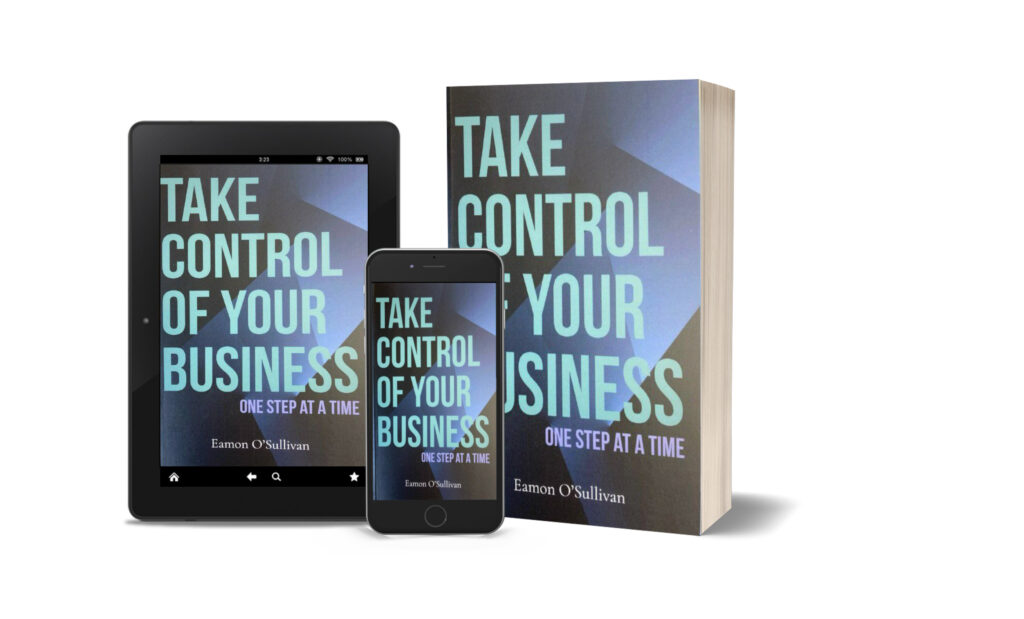
John also highly recommends you read this book, Take Control of Your Business by Eamon O’Sullivan https://osamcquillan.ie/product/take-control-of-your-business/
 As always, please contact us if you have any questions you may have.
Thanks for tuning in, listening, subscribing, and sharing the Tea & Mortgage podcast.